
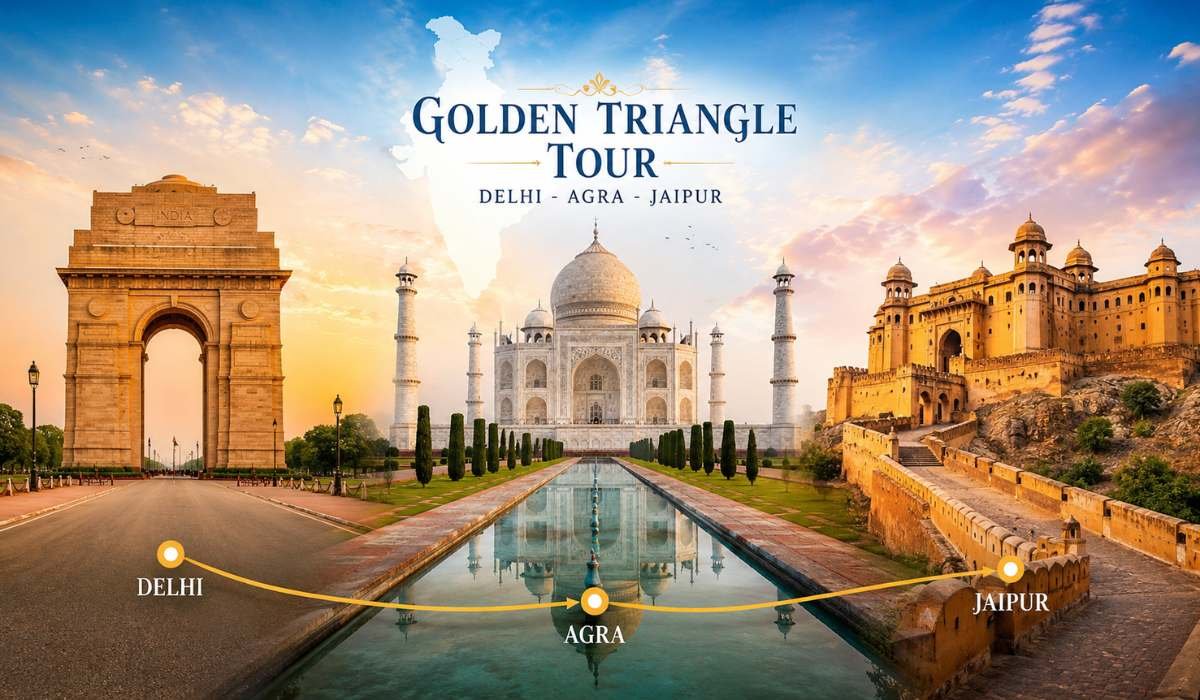
If you’re planning your first trip to India, chances are you’ve already come across the term “Golden Triangle.” It’s the most travelled tourist circuit in the country, and for good reason — in a single trip, it lets you experience Mughal architecture, royal Rajasthani palaces, and the energy of India’s capital, all within a few hundred kilometres of each other.
This guide covers everything you need to plan your Golden Triangle trip: what the circuit actually is, which cities and monuments it covers, how many days you should set aside, the best time of year to go, what it costs, and — most importantly — which version of the Golden Triangle tour fits your travel style. Once you’ve gone through this guide, head over to our Golden Triangle Tour Packages page to compare itineraries and book.
What Is the Golden Triangle Tour?
The Golden Triangle refers to the triangular route connecting three of North India’s most historically significant cities: Delhi, Agra, and Jaipur. On a map, the route formed by these three cities resembles a rough triangle, which is where the name comes from. Each city sits a comfortable 4 to 6 hour drive from the next, making it possible to cover all three without long, exhausting travel days.
The “golden” part of the name comes from the sheer concentration of UNESCO World Heritage Sites and royal monuments packed into this small geographic area — the Red Fort and Qutub Minar in Delhi, the Taj Mahal and Agra Fort in Agra, and the Amber Fort and City Palace in Jaipur. Nowhere else in India can you see this much history in such a short distance.
Why the Golden Triangle Is India’s Most Popular Travel Circuit
For first-time visitors to India, the Golden Triangle is usually the obvious starting point, and there are practical reasons for that. Delhi has the country’s busiest international airport, making it a natural entry point. From there, Agra and Jaipur are both well connected by expressway and rail, so logistics are simple even for travellers who’ve never been to India before.
Beyond convenience, the circuit also offers contrast within a small radius — Delhi’s blend of Mughal-era monuments and modern city life, Agra’s singular focus on the Taj Mahal and Mughal tomb architecture, and Jaipur’s pink-hued forts and palaces representing Rajput royal heritage. Few other regions in the world let you move between three such distinct historical chapters in under a week.
If you want to understand how the Golden Triangle fits within India’s broader travel landscape, our guide on Top Travel Packages in India for Foreign Tourists gives useful context.
Cities of the Golden Triangle and Their Top Attractions
Delhi
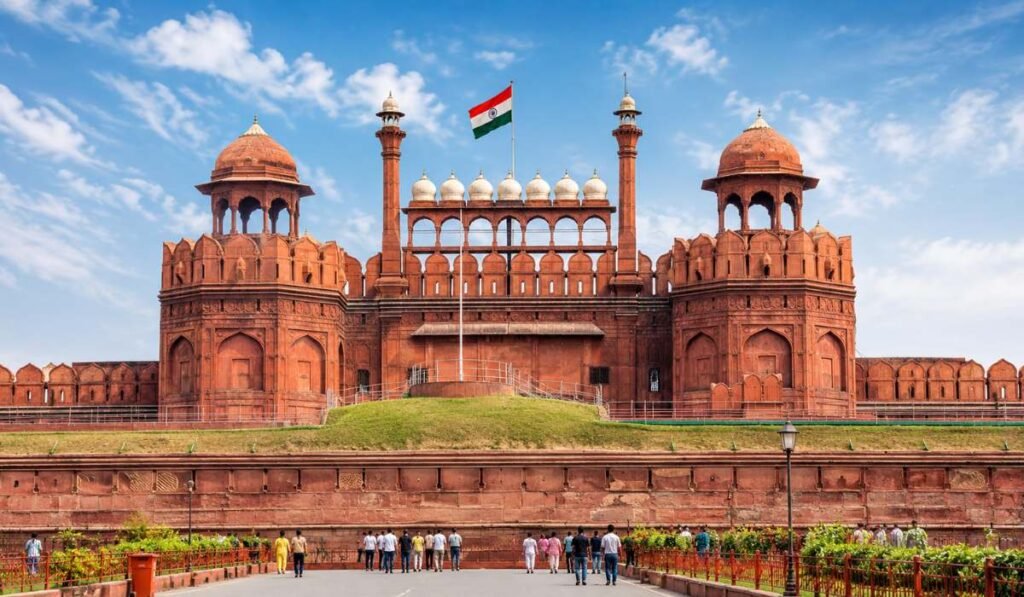
India’s capital blends old and new. In Old Delhi, the Red Fort and Jama Masjid reflect Mughal-era grandeur, while a rickshaw ride through Chandni Chowk gives you a taste of the city’s street life. In New Delhi, India Gate, Qutub Minar, and Humayun’s Tomb showcase a different layer of the city’s history.
Agra
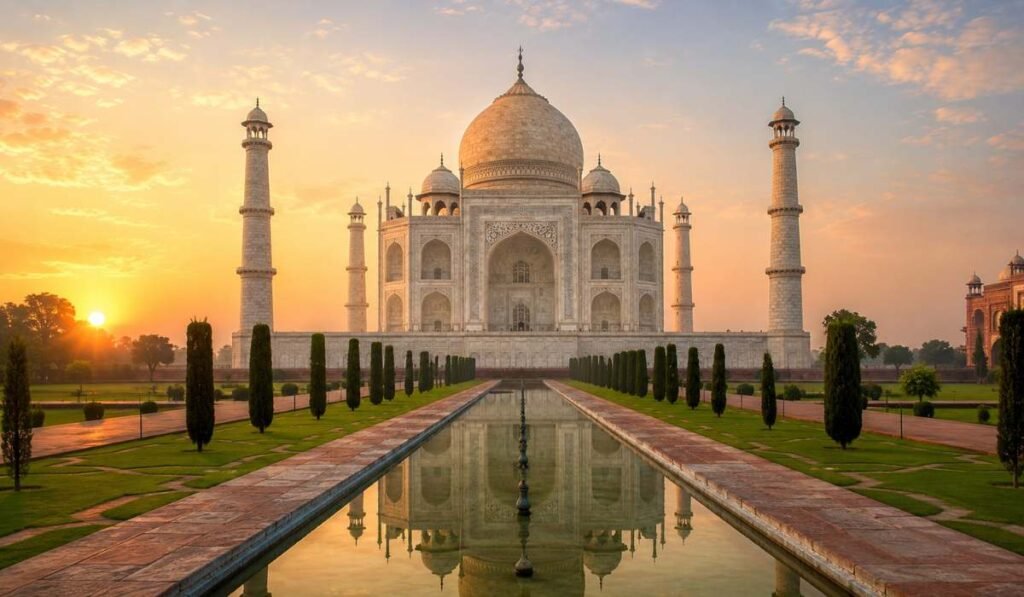
Agra exists almost entirely around one monument — the Taj Mahal, Shah Jahan’s marble mausoleum for his wife Mumtaz Mahal, and one of the most recognisable buildings in the world. Nearby, Agra Fort and the abandoned Mughal city of Fatehpur Sikri are worth half a day each.
If you’re arriving by train, our Agra Cantt to Taj Mahal Distance, Fare and Travel Guide covers all your local transport options in detail. And if photography is important to you, don’t miss our Photography Tips for Capturing the Perfect Taj Mahal Shot before you visit.
Jaipur
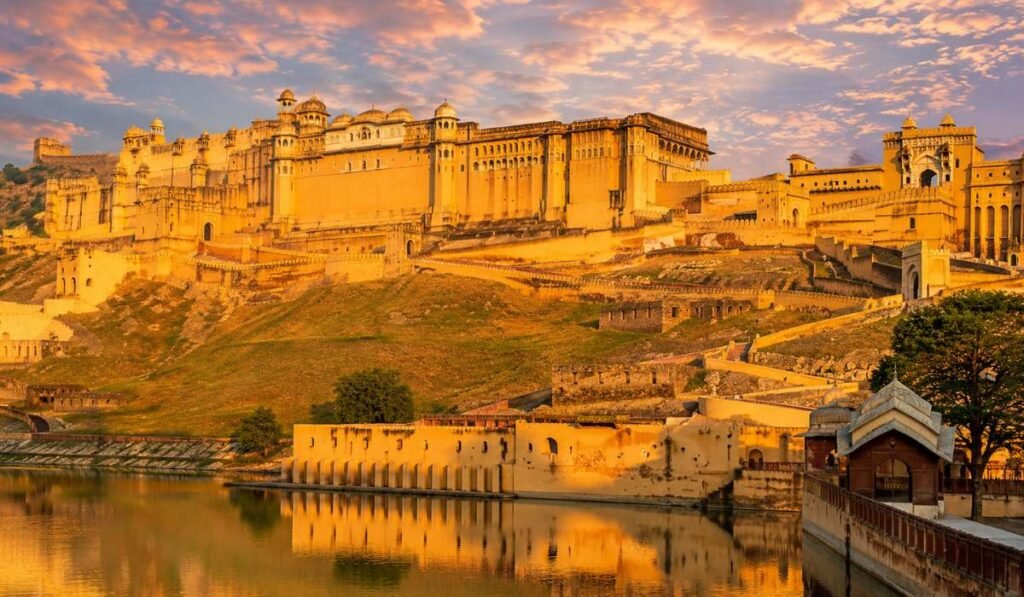
Known as the Pink City, Jaipur is the gateway to Rajasthan. The Amber Fort, perched on a hilltop outside the city, the Hawa Mahal (Palace of Winds), and the City Palace together tell the story of Rajput rule and architecture. Jaipur is also where most extended Golden Triangle itineraries branch off into the rest of Rajasthan.
Best Time to Visit the Golden Triangle
October to March is the ideal window, with comfortable daytime temperatures for sightseeing, especially in Agra and Jaipur where summer heat can be intense.
December and January bring cooler mornings and evenings, so light layers are recommended, while November and February to March offer warm, clear days that are excellent for outdoor sightseeing and photography at the Taj Mahal and Amber Fort.
April through June gets very hot across all three cities, with Agra and Jaipur regularly crossing 40°C, so sightseeing is best limited to early mornings if you travel during this period.
The July to September monsoon brings humidity and occasional heavy rain, particularly in Delhi, though the countryside around Jaipur turns notably green during this stretch, which some travellers find appealing for a quieter, less crowded trip.
Private Tour vs Group Tour: Which Should You Choose?
Most Golden Triangle travellers choose between a private guided tour and a fixed-departure group tour, and the right choice depends on flexibility versus budget.
A private tour gives you your own car, driver, and guide, with full control over pace, stops, and even which day you visit each monument — ideal for families, couples, or anyone travelling with specific interests like photography or wildlife.
A group tour is more cost-effective and works well for solo travellers who enjoy meeting other people along the way, though it runs on a fixed schedule with set departure dates.
All of our Golden Triangle Tour Packages are run as private, customisable tours, so your itinerary, hotel category, and daily pace can be adjusted to fit your trip.
How Many Days Do You Need for a Golden Triangle Tour?
This depends entirely on how much time you have and whether you want to add destinations beyond Delhi, Agra, and Jaipur.
3 to 4 days is enough to see the headline monuments in each city without much breathing room. Our 3 Day Golden Triangle Tour India and Golden Triangle Itinerary 4 Days are built for travellers with limited time, such as a layover or a short add-on to a business trip.
5 to 6 days allows a more relaxed pace with time for local markets, food experiences, and an extra half-day at sights like Fatehpur Sikri. Take a look at our Golden Triangle Tour 5 Days, Golden Triangle Tour 6 Days, and Golden Triangle India Holidays itineraries.
7 days or more gives you room to extend beyond the core triangle into wildlife, spiritual destinations, deserts, or beaches — covered in detail in the next section.
How to Travel Between Delhi, Agra and Jaipur

Most Golden Triangle tours move by private car with a driver, which is the most flexible option since it allows stops along the way at places like Fatehpur Sikri. The Delhi to Agra Expressway makes this leg around 3 to 3.5 hours.
Train is a faster alternative for the Delhi to Agra leg specifically, with high-speed options like the Gatimaan Express covering the distance in under two hours. The Agra to Jaipur leg is typically done by road and takes 4.5 to 5 hours.
If you’d rather not plan the logistics yourself, our team can build a custom route and pace through our Plan My Trip page.
Which Golden Triangle Tour Is Right for You?
We’ve designed multiple versions of the Golden Triangle tour around different interests and durations. Here’s how to find the one that matches what you’re looking for.
Classic and Short Itineraries
If you simply want the core Delhi, Agra, and Jaipur experience without add-ons, these are your best fit:
3 Day Golden Triangle Tour India
Golden Triangle Itinerary 4 Days
Golden Triangle Tour 5 Days
Golden Triangle Tour 6 Days
Golden Triangle India Holidays
Wildlife and Nature Add-ons
For travellers who want to combine heritage sightseeing with a chance to spot a tiger, Ranthambore National Park is a natural extension from Jaipur:
Golden Triangle Tour With Ranthambore
Golden Triangle With Tiger Safari
Golden Triangle Adventure: Culture Meets Thrill
Golden Triangle Adventure with Water Escapades
Spiritual and Pilgrimage Extensions
The Golden Triangle pairs naturally with some of India’s most important spiritual destinations:
Golden Triangle with Amritsar Tour — adds the Golden Temple, India’s holiest Sikh shrine
Divine Discoveries: Golden Triangle Spiritual Retreat — temple towns and pilgrimage stops
Golden Triangle With Pushkar Tour — includes the sacred Pushkar Lake
Golden Triangle With Varanasi Tour — extends the journey to the ghats of the Ganges
Golden Triangle with Haridwar and Rishikesh — includes two of India’s most significant yoga and pilgrimage towns
Heritage and Desert Extensions
If palaces, forts, and desert landscapes interest you beyond Jaipur:
Desert Elegance: Luxury Golden Triangle Tour with Jaisalmer — golden desert forts and camel safaris
Golden Triangle With Khajuraho Tour — UNESCO-listed temple carvings
Golden Triangle With Rajasthan Tour — fuller tour of royal Rajasthan
Beach and Leisure Extensions
For travellers who want to balance heritage sightseeing with relaxation:
Golden Triangle And Goa Tour — adds beach time on India’s west coast
Golden Triangle With Kerala Tour — pairs the circuit with Kerala’s backwaters and hill country
Luxury Experiences
If you’re looking for a more premium pace with upgraded stays:
Lavish Getaway: Luxury Golden Triangle Tour with Udaipur and Varanasi
Desert Elegance: Luxury Golden Triangle Tour with Jaisalmer
You can browse all of these side by side, with pricing and day-by-day details, on our Golden Triangle Tour Packages page.
Estimated Cost of a Golden Triangle Tour
Costs vary depending on trip length, hotel category, and whether you add destinations like Ranthambore, Jaisalmer, or Goa. As a starting point, our Golden Triangle packages begin from $1,000 per person, with the final price depending on season, group size, and the level of accommodation you choose.
Longer itineraries with luxury stays or wildlife safaris will naturally cost more than a short 3 to 4 day classic tour. For an accurate quote based on your travel dates and preferences, reach out through our Plan My Trip page.
Tips for First-Time Golden Triangle Travellers
Book Taj Mahal tickets and Agra Fort entry in advance during peak season from October to March to avoid long queues.
Dress modestly when visiting religious sites such as the Golden Temple, Jama Masjid, or temples in Pushkar and Varanasi.
Carry a light jacket for early morning sightseeing in winter, especially at the Taj Mahal sunrise viewing.
If you’re combining the Golden Triangle with Ranthambore, book your safari slots early — permits are limited and fill up quickly in winter.
Stick to bottled or filtered water throughout the trip, and ease into local food gradually if you’re not used to spicier cuisine.
Frequently Asked Questions
How many days are ideal for a Golden Triangle tour?
Most travellers find 5 to 6 days comfortable for the core Delhi, Agra, and Jaipur circuit. Shorter 3 to 4 day trips work if you’re short on time, while 7 or more days are better if you want to add destinations like Ranthambore, Varanasi, or Goa.
What is the best time to visit the Golden Triangle?
October to March, when daytime temperatures are mild and comfortable for extended sightseeing.
Can the Golden Triangle be done by train instead of car?
Yes, particularly for the Delhi to Agra leg via trains like the Gatimaan Express. The Agra to Jaipur leg is more commonly done by road.
Is the Golden Triangle suitable for first-time visitors to India?
Yes — it’s specifically why most first-time travellers choose this circuit. Good road and rail connectivity, English-speaking guides, and well-established tourist infrastructure make it an easy starting point.
Can I extend my Golden Triangle tour to include Ranthambore or Rajasthan?
Yes, several of our itineraries are built specifically for this, including the Golden Triangle Tour With Ranthambore and Golden Triangle With Rajasthan Tour.
Do I need a guide for the Golden Triangle tour?
While not mandatory, a local guide at sites like the Taj Mahal, Amber Fort, and Red Fort adds significant historical context that’s easy to miss on your own. All our Golden Triangle packages include guided sightseeing at key monuments.
Is the Golden Triangle safe for solo travellers and families?
Yes, the circuit is well-travelled and has established tourist infrastructure in all three cities. As with travel anywhere, it’s sensible to keep valuables secure, use registered transport, and avoid isolated areas after dark, particularly in Old Delhi and Agra’s older neighbourhoods.
Ready to Plan Your Trip?
Browse all our Golden Triangle Tour Packages to compare itineraries, durations, and pricing, or visit our Plan My Trip page for a custom route built around your dates and interests. You can also call us directly at +91 99283 29111 and our team will help you put together the right itinerary from scratch.


