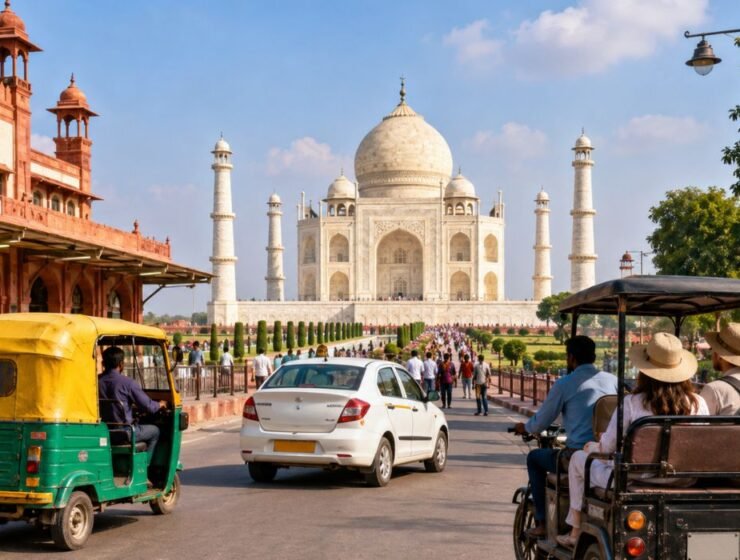
The Taj Mahal is more than just a monument. It is also recognized globally as one of the most remarkable examples of Mughal architecture and is officially protected as a UNESCO World Heritage Site. It is a place where light, architecture, emotions, and history come together in a truly unforgettable way. Every year, travelers from around the world arrive in Agra hoping to capture that perfect photo of India’s most iconic landmark. Some come with professional cameras, while others simply use their smartphones, but everyone shares the same goal — taking a photograph that truly reflects the beauty of the Taj Mahal.
These Photography Tips for Capturing the Perfect Taj Mahal Shot can help you create stunning images regardless of your photography experience. From choosing the best time to photograph the Taj Mahal to finding the most beautiful angles around the monument, small details can completely change the final result.
The good news is that you do not need expensive equipment to take memorable photos here. With the right lighting, thoughtful composition, and a little patience, even a mobile phone can capture breathtaking Taj Mahal travel photography moments.
Whether you are planning a sunrise visit, a cultural photography session, or simply looking for the best Taj Mahal Instagram spots, this guide will help you prepare for an unforgettable photography experience.
Best Time of Day for Taj Mahal Photography
Timing plays a major role in photography, especially when photographing a white marble monument like the Taj Mahal. The color and mood of the structure change throughout the day depending on the sunlight, weather, and crowd levels.
Sunrise Photography
Taj Mahal sunrise photography is often considered the best option for photographers. During sunrise, the soft golden light gently reflects off the white marble, creating a dreamy and peaceful atmosphere. The crowds are also smaller during the first hour after opening, allowing more freedom for clean compositions.
The early morning light is softer and more flattering, especially for portraits and wide-angle shots. You can capture warm tones, calm reflections, and beautiful sky colors before the strong daylight appears.
Late Afternoon & Sunset
Sunset photography offers a completely different mood. The monument develops warmer orange and pink tones during golden hour. Reflections in the water channels become more dramatic, and shadows add depth to architectural details.
However, sunset hours are usually more crowded than sunrise, so patience becomes important.
Seasonal Lighting Differences
Winter mornings often create soft mist around the Taj Mahal, giving photos a cinematic appearance. Summer mornings provide crisp clarity and vibrant skies, while monsoon season can bring dramatic clouds that make landscape shots more artistic.
If possible, visit the monument during both sunrise and sunset to experience different moods and lighting styles.
Why Sunrise Gives the Most Magical Taj Mahal Photos
There is something unforgettable about seeing the Taj Mahal at sunrise. As the gates open and the first sunlight slowly touches the marble surface, the monument feels calm, silent, and almost unreal.
The atmosphere during early morning photography is very different from the busy daytime experience. Birds fly across the sky, the air feels cooler, and the soft light creates delicate shadows across the domes and arches.
Many travelers say sunrise is the moment when the Taj Mahal feels most emotional and photogenic. The peaceful surroundings allow photographers to slow down, experiment with compositions, and truly appreciate the beauty of the monument instead of rushing through crowded viewpoints.
For travelers planning a dedicated photography experience, exploring a Taj Mahal Sunrise Tour can help visitors experience the monument during the most beautiful lighting conditions for photography.
Best Photography Spots Around the Taj Mahal
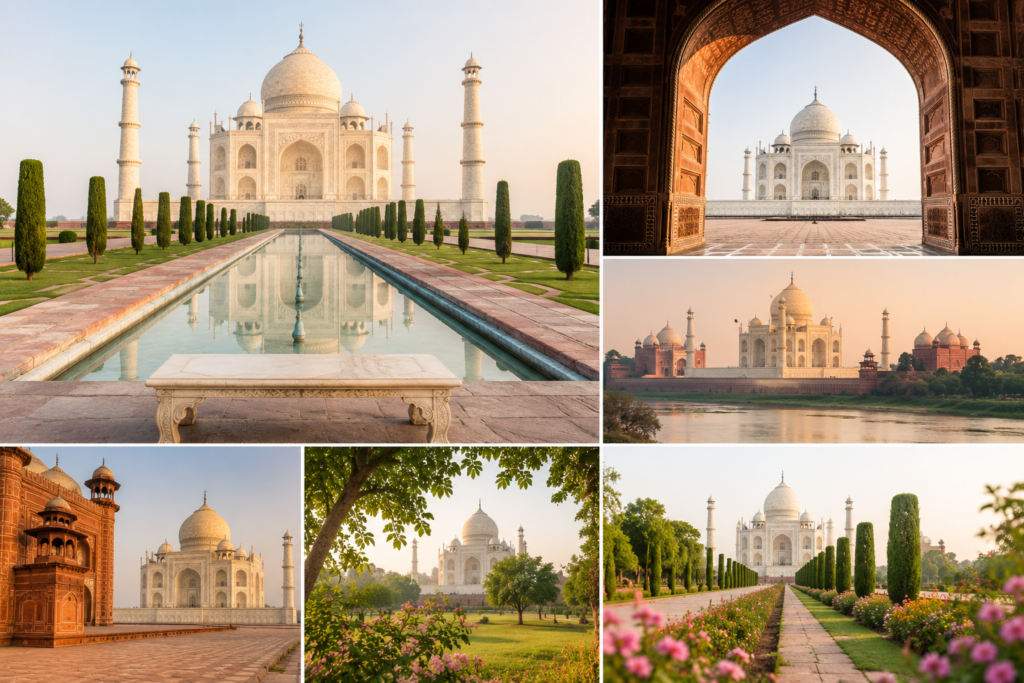
Finding the right angle can dramatically improve your images. While most tourists capture photos from the main platform, several lesser-known spots provide unique perspectives.
The Main Central Bench
This is one of the most iconic Taj Mahal photo spots. Located directly in front of the reflecting pool, the bench provides a perfectly symmetrical composition. Arriving early is important because this area becomes crowded quickly.
Reflecting Pool Symmetry Shot
The long water channel leading toward the monument creates beautiful reflection photography opportunities. Use the reflection lines to guide the viewer’s eye directly toward the Taj Mahal.
Mosque Side Angle
The western mosque area provides a unique side perspective with red sandstone architecture framing the white marble background. This angle works especially well for portrait photography.
Darwaza-i-Rauza Entrance Frame
The grand entrance gate naturally frames the Taj Mahal and creates one of the most dramatic compositions in the complex. Position yourself carefully to center the monument inside the arch.
Mehtab Bagh River View
Located across the Yamuna River, Mehtab Bagh offers one of the best panoramic views of the Taj Mahal. This location is especially beautiful during sunset and provides quieter photography conditions.
Side Garden Perspectives
The gardens on both sides of the main walkway offer creative foreground framing using trees, flowers, and pathways. These areas are excellent for candid photography and storytelling shots.
Camera Settings for Better Taj Mahal Photos
You do not need to be a professional photographer to improve your photos. Understanding a few basic settings can make a significant difference.
ISO
Keep the ISO as low as possible during daylight photography. Lower ISO settings reduce image noise and create sharper photos.
Aperture
For wide architectural shots, use a medium aperture like f/8 or f/11 to keep the entire structure sharp. For portraits, a wider aperture helps blur the background slightly.
Shutter Speed
Use faster shutter speeds when photographing moving subjects or handheld shots. During sunrise or low-light conditions, stabilize your camera to avoid blur.
Wide-Angle Lens
A wide-angle lens is ideal for capturing the full scale of the Taj Mahal, especially from close viewpoints.
Portrait Mode
Portrait mode works beautifully for people photography around the gardens and side angles. The soft background blur helps subjects stand out naturally.
Smartphone Photography Tips
Modern smartphones are capable of capturing excellent travel photography. Use HDR mode, tap to adjust exposure manually, and avoid over-editing your photos afterward.
How to Avoid Crowds in Your Photos
One of the biggest photography challenges at the Taj Mahal is dealing with crowds. Since it is one of the world’s most visited landmarks, patience and timing are essential.
Arrive Early
Entering the complex right after opening time gives you the best opportunity for cleaner shots.
Visit on Weekdays
Weekdays are generally less crowded compared to weekends and public holidays.
Use Creative Framing
Trees, arches, and foreground objects can help hide unwanted people from your composition.
Experiment with Low Angles
Shooting from lower angles often removes distractions and creates more dramatic architectural perspectives.
Wait for the Right Moment
Sometimes the best photography tip is simply patience. Waiting a few extra seconds can completely transform your composition.
Creative Taj Mahal Photography Ideas
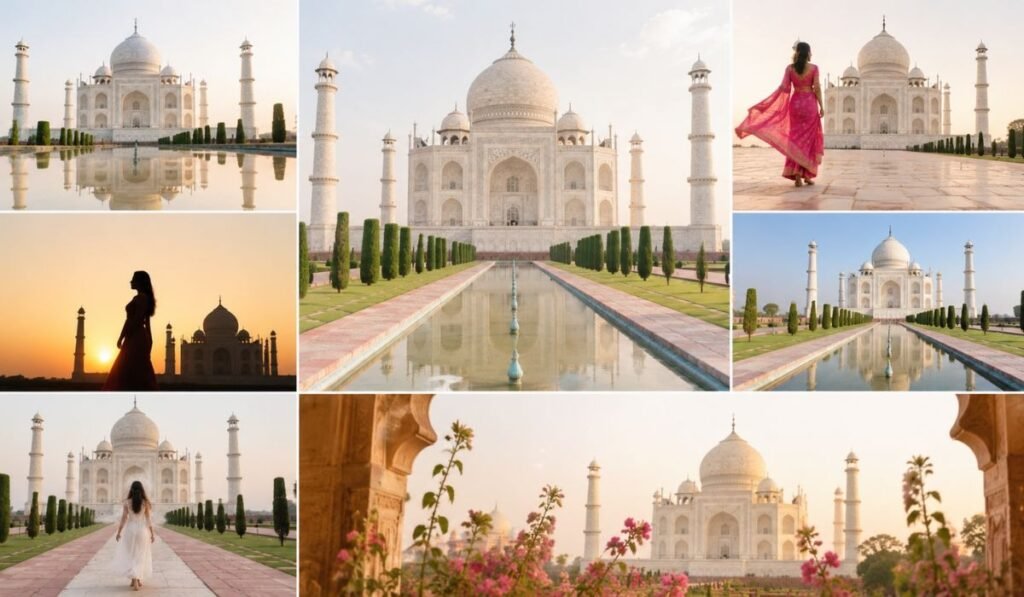
If you want your images to feel unique, experiment with different styles instead of taking only standard tourist photos.
Reflection Photography
Use puddles, water channels, or reflective surfaces to create artistic mirror compositions.
Silhouette Photography
During sunrise or sunset, position your subject against the bright sky to create dramatic silhouettes.
Traditional Indian Outfit Photos
Colorful traditional outfits contrast beautifully against the white marble background and create visually striking portraits.
Symmetry Compositions
The Taj Mahal’s architecture is perfectly symmetrical, making centered photography compositions highly effective.
Candid Walking Shots
Natural movement creates storytelling images that feel more authentic than posed photos.
Foreground Framing
Use flowers, arches, or pathways to add depth and dimension to your shots.
Best Season for Taj Mahal Photography
Each season offers a different visual experience for photographers.
Winter
Winter mornings often create soft fog around the monument, adding mystery and atmosphere to photos. The cooler weather is also more comfortable for long photography sessions.
Summer
Summer mornings usually provide cleaner skies and sharper visibility. Sunrise photography works especially well during this season.
Monsoon
Monsoon clouds create dramatic backgrounds that can make landscape photography more cinematic.
Best Overall Months
October to March is generally considered the best time to photograph the Taj Mahal because of pleasant temperatures and softer natural lighting.
Smartphone Photography Tips at Taj Mahal
You do not need professional equipment to capture beautiful memories.
Clean Your Lens
A simple lens cleaning can instantly improve image clarity.
Use Grid Alignment
Turn on the grid feature to improve symmetry and composition.
Enable HDR Mode
HDR helps balance bright skies and shadow details.
Adjust Exposure Manually
Tap on the brightest area of the screen and slightly lower exposure to avoid overexposed marble surfaces.
Use Portrait Mode Carefully
Portrait mode works best when there is enough distance between the subject and background.
Edit Lightly
Use editing apps to improve brightness and contrast naturally without making images look artificial.
Photography Rules & Important Visitor Tips
Before visiting, it is important to understand photography guidelines inside the Taj Mahal complex.
Allowed Equipment
DSLR cameras, smartphones, and standard photography equipment are generally allowed.
Drone Restrictions
Drones are not permitted around the Taj Mahal due to security regulations.
Security Checks
Visitors must pass security screenings before entering, so carry only necessary equipment.
Tripod Rules
Tripod policies may vary depending on security conditions and timing, so check current visitor guidelines before your trip.
Respectful Photography
The Taj Mahal is not only a tourist attraction but also a UNESCO World Heritage Site with cultural importance. Be respectful while photographing other visitors and restricted areas.
Travelers planning a wider cultural experience can also explore a Same Day Taj Mahal Tour or a Golden Triangle Tour India journey for additional architectural photography opportunities.
FAQs
1. What is the best time to photograph the Taj Mahal?
Sunrise is usually considered the best time because the lighting is softer, the weather is cooler, and the crowds are smaller. Early morning photography creates warm tones and peaceful surroundings.
2. Can you take DSLR cameras inside Taj Mahal?
Yes, DSLR cameras are generally allowed inside the Taj Mahal complex. However, visitors should avoid carrying unnecessary accessories that may slow security checks.
3. Is tripod allowed at Taj Mahal?
Tripod rules may change depending on current security regulations. It is always best to check updated guidelines before visiting.
4. Which side gives the best Taj Mahal view?
The central reflecting pool area provides the most iconic symmetrical view, while Mehtab Bagh offers excellent panoramic perspectives from across the river.
5. What should I wear for Taj Mahal photos?
Light-colored or traditional Indian outfits often look beautiful against the white marble background. Comfortable clothing is recommended for walking around the complex.
6. Can I take photos with mobile phones?
Yes, modern smartphones can capture excellent Taj Mahal photos, especially during sunrise or golden hour.
7. Is sunrise photography worth it?
Absolutely. Sunrise offers softer light, cooler temperatures, fewer crowds, and a more peaceful atmosphere for photography.
8. Which month is best for Taj Mahal photography?
October to March is generally considered the best period because of pleasant weather and comfortable photography conditions.
Conclusion
Photographing the Taj Mahal is about more than simply taking pictures. It is about capturing emotion, atmosphere, architecture, and memories that stay with you long after the journey ends.
By choosing the right time of day, experimenting with creative compositions, understanding basic camera settings, and exploring different photography spots, you can create images that truly reflect the magic of this iconic monument.
Most importantly, do not spend the entire visit looking only through a camera screen. Take a moment to experience the peaceful beauty of the Taj Mahal with your own eyes as well.
Whether you are planning a dedicated photography visit or combining it with a cultural journey through North India, the Taj Mahal offers endless inspiration for travelers, storytellers, and photography lovers alike.